Do CS2 skins actually appreciate?
The honest answer is: a few do, most don't. For every skin that quietly doubled over several years, there are dozens that peaked at release, faded with the hype, and now trade for less than people paid. Skins are a collectible market, driven by attention and scarcity rather than earnings or yield. There is no dividend, no buyback, and no fundamental floor under a price.
That doesn't mean investing is pointless — it means you have to be selective. The skins that have historically gained value almost always share the same underlying mechanics. Understanding those value drivers is the whole game.
The value drivers that matter
When you strip away the noise, long-term skin value comes down to a short list of forces. The more of these a skin stacks, the better its odds of holding or gaining value:
- Fixed or shrinking supply. This is the biggest one. Discontinued cases and retired items stop entering circulation, and the existing stock only falls as people open or consume them. Scarcity that increases over time is the closest thing to a tailwind.
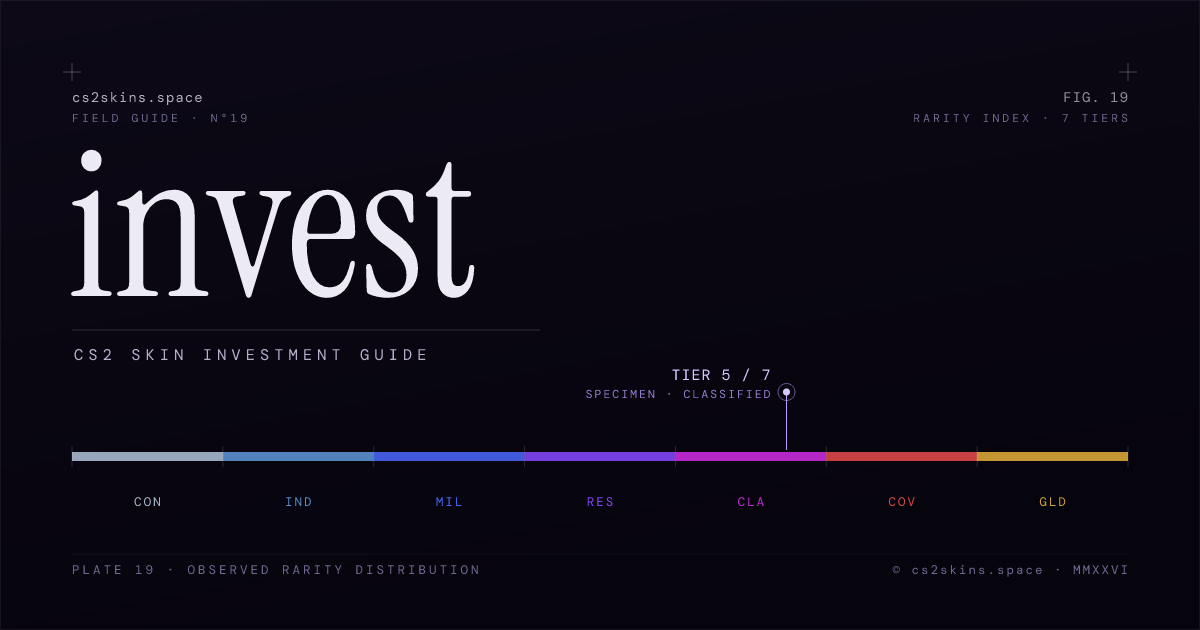
- Rarity tier. Covert (red) and Knife/Gloves (gold) items sit at the top of the drop odds, so far fewer exist. Mil-Spec and Restricted skins are vastly more common and rarely scarce.
- Low float and special patterns. A pristine low float or a sought-after pattern — like a Blue Gem Case Hardened — turns one copy into a rare variant collectors compete for.
- Popular finishes on weapons people use. Demand has to be real. Clean, recognisable skins on the AK-47, AWP and knives hold interest far better than obscure finishes on weapons nobody equips.
- Sticker rarity. Tournament stickers from early Majors — Katowice 2014 holos being the famous example — are finite and have appreciated dramatically, and a well-placed rare sticker can lift the value of the gun it's applied to.
What has historically held value
No category is a sure thing, but a handful have shown the most resilience over the years. Each maps cleanly back to the drivers above:
- Sealed discontinued cases. The textbook supply story — stock can only shrink as cases are opened.
- Top-tier knives in clean finishes and exteriors, where rarity and constant demand overlap. Browse the knives category to see the range.
- Blue Gems and other special patterns — individual copies that are effectively one-of-a-kind.
- Factory New, low-float Covert skins on weapons people actually run, such as marquee AK-47 and AWP finishes.
- Katowice 2014 (and other early Major) stickers, the most cited example of finite tournament items appreciating over time.
Notice what's not on this list: the average Mil-Spec drop, mass-produced Field-Tested commons, and finishes that flooded the market. Those are the skins that tend to drift sideways or down.
The risks you're actually taking
Every potential upside comes attached to real, specific risks. Be clear-eyed about them before committing money:
- Valve controls the supply. Drop pools change, cases get discontinued — or re-introduced. Valve has previously altered availability in ways that softened prices. You are investing inside someone else's game.
- Market sentiment is fickle. Skin prices ride hype, content creators, and the broader player count. Interest can evaporate quickly.
- Liquidity and spread. The gap between buy and sell prices can be wide, and thin markets mean you may not sell near the quoted price when you want to.
- Time. Most gains, where they happen at all, take years. Your capital is locked in an item, not earning anything in the meantime.
- Scams and account security. Trade scams, fake middlemen and account theft are persistent threats. A stolen inventory is a total loss.
- Regional and platform restrictions. Trading rules, holds, and country-level limits can affect whether — and where — you can sell.
A practical, low-regret approach
If you still want exposure, a few principles keep the downside manageable. First, diversify — spread across several items and categories rather than betting everything on one "sure" pattern. Second, assume a long horizon; this is a multi-year game, not a flip.
Third, and most important: buy what you'd be happy to keep. If a skin never appreciates but you genuinely enjoy using it, you haven't really lost — you bought a thing you wanted. That mindset turns a speculative gamble into an affordable hobby with optional upside.
How to research before you buy
Price your candidates against our live multi-market price grid across dozens of marketplaces, powered by our own in-house valuation algorithm. Every skin page shows the typical range for each finish and exterior, so you can judge whether a listing is fairly priced and how wide the spread really is before you commit. Start in the skins catalog or browse value angles in the StatTrak deals list.
If cases are on your radar, read the case odds and EV guide first — it explains why opening cases is usually negative expected value, and why sealed cases are the part of that economy with a supply story. Then explore current prices on the cases catalog and learn the vocabulary in our CS2 skins glossary.
Not financial advice
This guide is for educational purposes only and is not financial, investment or trading advice. CS2 skins are a volatile, unregulated collectible; prices can fall as easily as they rise, and past performance never guarantees future results. Do your own research and only spend what you can comfortably afford to lose.
The bottom line
Most CS2 skins won't make you money — but a minority with genuine scarcity and lasting demand have held or grown in value. Focus on supply-constrained items you'd enjoy owning, diversify, think in years not weeks, and verify every price against our live grid. Treat it as a hobby first and an investment second, and you'll rarely regret a purchase. For more on the mechanics behind value, see our full guides library.